
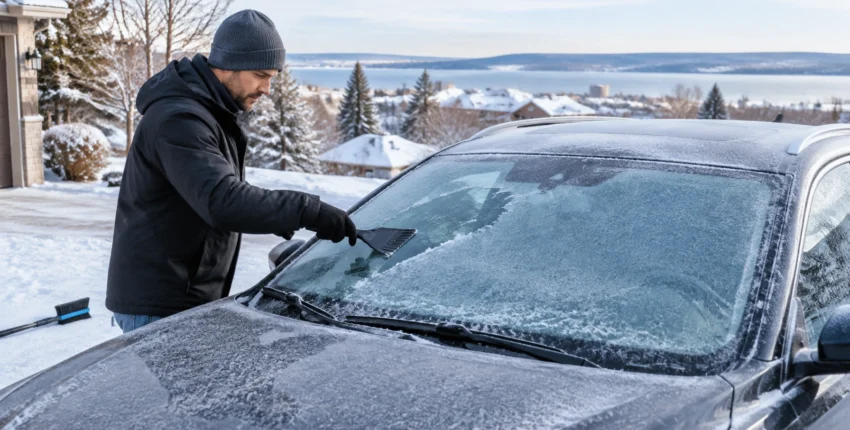
A frozen windshield is frustrating, but it’s also a visibility problem you shouldn’t try to solve by peering through a small cleared patch. Before you drive, make sure your windshield and other windows are clear enough to see properly. The right washer fluid, sound wiper blades and a working defroster can make a cold morning much easier, and safer.
Here’s how to handle common winter visibility problems, from frozen washer lines to glass that keeps fogging up.
Why summer washer fluid can fail in a Barrie winter
Washer fluid designed for warm weather may freeze when temperatures drop. If that happens, the fluid may not spray when you need it, and ice can obstruct the reservoir, hoses or nozzles.
For winter, choose washer fluid rated for temperatures around -40°C or lower. Check the label rather than relying on the colour of the fluid. Keep the reservoir topped up, and consider carrying a spare container in your vehicle. Both CAA’s winter car care guidance and Transport Canada’s winter vehicle preparation advice recommend cold-rated washer fluid for winter conditions.
If summer fluid is still in the system, topping it up with winter fluid may not be enough in very cold weather because the remaining mixture can still freeze. When in doubt, check your owner’s manual or ask a technician what’s suitable for your vehicle.
What to do if the washer system freezes
If you press the washer control and nothing comes out, don’t keep trying it. Repeatedly running the pump against frozen fluid may put unnecessary strain on the system.
Instead, park the vehicle in a heated space and give the fluid time to thaw. Once it has thawed, refill the reservoir with winter-rated fluid. If it still won’t spray, the blockage may remain in a hose or nozzle, or there could be another issue to diagnose. Avoid poking nozzles with sharp objects, which could damage them.
Until the system works, clean the glass manually while parked. Don’t set out in conditions where road spray or grime could quickly obscure your view.
Check your wiper blades before the first snowfall
Wipers are easy to overlook until they start smearing slush across your line of sight. Look for cracks, splits, hardened rubber, loose edges or sections that lift away from the glass. If the blades streak, skip, chatter or leave broad patches uncleared, it’s time to replace them.
Winter wiper blades are designed to handle snow and ice differently from many standard all-season blades. The best choice depends on your vehicle and how you use it, so check the owner’s manual and select a blade that fits correctly. A new blade won’t fix a damaged wiper arm or a windshield covered in packed ice, but it can help maintain a cleaner sweep when the glass is clear.

If the wipers are frozen to the glass
Don’t switch them on while they’re stuck. The motor and blades aren’t meant to break a bond of ice, and forcing them can damage the blade or strain the mechanism.
Use the front defroster to warm the windshield and loosen the ice. Carefully free each blade once it’s no longer frozen in place. If your vehicle has a wiper service position, follow the instructions in its owner’s manual. Some wipers can hit the hood or be damaged if you lift them the wrong way, so don’t force them upright.
You may choose to lift wipers before a storm, but check your vehicle’s instructions first. If they’re already frozen down, focus on defrosting and clearing the glass rather than pulling hard on the arms.
Scrape and defrost without damaging the windshield
Start the vehicle and select the front windshield defrost setting. As the cabin warms, the airflow will help loosen frost from the inside and outside of the glass. Use a proper plastic ice scraper to remove exterior ice, working patiently rather than striking or chipping at the windshield.
Never pour hot water on frozen glass. A sudden temperature change can stress the windshield and cause it to crack. Also avoid using the wipers to clear heavy ice or snow; brush and scrape the glass first.
Turn on the rear-window defroster, too, and clear snow from all windows, mirrors, lights and the roof before leaving. Snow left on top can slide forward as you brake and obstruct your view.
If you warm up the vehicle while it’s parked, make sure the tailpipe is clear of snow and the vehicle is in a safe, well-ventilated location. Don’t drive until you have a clear view through the windshield and other necessary windows.
Why the windshield fogs on the inside
Interior fog is usually moisture collecting on cold glass. Your breath adds humidity, and so do wet boots, snowy floor mats, damp coats and slush brought into the cabin. The glass is cold enough that this moisture condenses into a film, much like a bathroom mirror after a shower.
To clear it, select the front defrost setting and use fresh air rather than recirculation. Recirculation keeps drawing cabin air back through the system, which can trap humidity inside. If your vehicle allows it, switch on the A/C with the defrost setting: air conditioning helps remove moisture from the air, even when you’re also using heat. Some systems manage this automatically.
The rear defroster can clear condensation from the back window. Once the glass is clear, help prevent a repeat by removing wet mats or snow, keeping the inside of the windshield clean, and avoiding prolonged recirculation in damp conditions.
When persistent fog deserves a closer look
Ordinary condensation should improve as the cabin dries and the defroster runs. But fog that keeps returning (especially alongside a sweet smell, a greasy film on the inside of the windshield, unexplained coolant loss or damp carpet near the front passenger footwell) may point to a heater-core or cooling-system problem.
Those signs don’t confirm a specific fault on their own, but they’re worth checking. A weak defroster can also result from poor airflow or a climate-control issue. If the windows won’t stay clear, don’t rely on guesswork; arrange an inspection.
Quick fixes for common winter visibility problems
- Washer fluid won’t spray: Stop pumping the control. Let the system thaw in a heated space, then refill with winter-rated fluid.
- Wipers streak or skip: Clean the blades and windshield. Replace blades that are cracked, split, hardened or still streaking.
- Wipers are frozen down: Don’t switch them on or pull hard. Use the defroster to loosen the ice, then free them carefully.
- Windshield is icy: Use the defroster and a plastic scraper. Never pour hot water on the glass.
- Glass fogs inside: Use defrost, fresh air and A/C if available; remove wet items and switch off recirculation.
- Fog returns repeatedly: Look for damp carpets, a sweet smell, oily residue or coolant loss, and have the heating system checked.
Clear glass is part of winter-ready maintenance
Good visibility depends on more than scraping in a hurry. Winter-rated washer fluid, healthy wiper blades and a functioning defroster work together, like three parts of the same safety system. Check them before cold weather settles in, and don’t drive until the glass is clear.
If your defroster is weak, the washer system remains blocked after thawing, or the cabin windows keep fogging, Auto Tech Solutions provides climate control service in Barrie. For dependable auto repair in Barrie, contact the team to arrange an inspection.