If you live in Barrie, you already know what winter does to the roads. Snow, freezing rain, slush and ice make driving conditions difficult: and road salt helps keep those conditions manageable. But the same salt that improves traction can quietly attack the metal underneath your vehicle.
Rust rarely announces itself. It develops behind dirt, inside seams and around brackets where you cannot easily see it. By the time corrosion becomes obvious, an important component may already be weakened.
That is why late September is a smart time to think about underbody protection. Before the first serious salting begins, you can build a simple routine that helps protect your vehicle and gives a technician the opportunity to identify safety concerns early.
Why Ontario road salt is so corrosive
Road salt is not just dry white material sitting on the pavement. Once it mixes with moisture from snow, rain or slush, it becomes a conductive brine. That liquid can work its way into seams, crevices, mounting points and other areas where bare or lightly protected metal is exposed.
A 2023 transportation research paper from Carleton University and the Transportation Association of Canada examined how chloride-based deicers affect steel. It explains that road salt and brine can accelerate the electrochemical corrosion of metal when moisture, air and chloride ions are present. You can read the research paper here.
Liquid brine can be especially persistent. It clings to the underside of your vehicle, stays active as long as moisture is present and can be pushed into areas that a quick exterior wash will never reach.
Barrie drivers also face repeated freeze-and-thaw cycles. Salt-laden slush may freeze onto the underbody, thaw during a warmer afternoon and then move deeper into seams and cavities. Every trip through wet winter roads adds another opportunity for corrosion to begin.
The underbody parts that rust first
Not all rust is equally urgent. Surface corrosion on an exhaust shield may be inconvenient or unattractive, while corrosion on a brake line can create a serious safety risk. These are some of the areas technicians pay close attention to during an underbody inspection.
Brake lines and brackets
Steel brake lines run underneath your vehicle and are exposed to water, salt and road debris. Corrosion may begin as light pitting before developing into heavy scaling or a weakened section.
A badly corroded brake line can leak fluid and reduce braking performance. You may not notice a problem until the brake pedal feels different, the brake warning light comes on or the system is placed under heavy pressure.
Brake line clips, brackets and mounting points can also rust. When these supports fail, the line may move, rub against another component or collect even more salty debris.
If you notice a soft brake pedal, a brake fluid warning light or fluid near the wheels or underbody, arrange a professional inspection promptly. Auto Tech Solutions provides brake and suspension repair in Barrie for vehicles of all makes and models.
Fuel lines and tank straps
Fuel lines, clips and tank straps are also vulnerable to salt exposure. Corrosion around a fuel line can eventually create a leak, while a weakened tank strap may no longer hold the fuel tank securely.
You should never ignore the smell of fuel, dampness near the tank or visible corrosion around fuel-system components. These issues require professional attention rather than a temporary repair.
Subframes and structural mounting points
Your vehicle’s subframe connects important suspension and steering components to the body. Salt and moisture collect around seams, bolt heads and mounting points, especially where dirt remains trapped.
Advanced corrosion in a subframe or structural area can affect suspension geometry, alignment and the way the vehicle responds during braking or a collision. This is one reason an underbody inspection involves more than simply looking for brown flakes. A technician needs to assess the condition, thickness and strength of the metal.
Rocker panels, floorpan seams and body mounts
Rocker panels and floorpan seams often trap moisture from inside and outside the vehicle. Rust can begin behind a plastic trim panel, inside a drainage channel or along a welded seam.
Pay attention to bubbling paint, blistering, damp carpeting, brown staining or holes near the lower edges of the body. These symptoms may indicate that corrosion has progressed beyond a cosmetic issue.
Suspension components and exhaust hangers
Control arms, springs, struts, shock mounts, crossmembers and exhaust hangers all encounter road spray. Surface rust is common, but heavy scaling, cracked mounts or thinning metal should be assessed by a technician.
Corrosion can also make future repairs more difficult. A rusty fastener may seize, and a deteriorated bracket can turn a straightforward repair into a more involved job.
What actually helps prevent underbody rust
You cannot eliminate winter corrosion completely, but you can slow it down significantly.
Wash the underbody regularly
During active salt season, use a car wash with an underbody rinse approximately every one to two weeks, depending on how much you drive. Highway driving, rural roads and frequent trips through wet slush may justify more frequent washing.
The important areas include:
- Frame rails and subframes
- Wheel wells and suspension components
- Brake and fuel line routes
- Crossmembers and mounting brackets
- Lower rocker panels and floorpan edges
An underbody rinse is particularly useful after a thaw. When frozen slush turns into liquid, a thorough wash can remove brine before it remains trapped against the metal.
Avoid washing in extreme cold if water may freeze in door seals, locks or drainage areas. If you park in a heated garage, remember that warmth can keep salt and moisture active on the vehicle. A dry, unheated space is often preferable for a wet, salted vehicle.
Consider professional rustproofing or undercoating
Rustproofing products are not all the same. Penetrating oil treatments are designed to creep into seams, cavities and joints. Wax-based or thicker protective coatings may provide a barrier on suitable clean, dry surfaces.
The correct option depends on your vehicle’s age, existing corrosion, construction and previous treatments. A coating should not be applied over trapped moisture or used to hide serious structural rust. Some areas: including drains, brake components, exhaust parts and moving suspension components: must remain free of unsuitable material.
Think of rustproofing as a raincoat, not a permanent shield. It can reduce exposure, but it does not replace regular washing or inspections.
Repair chips and scratches early
A small paint chip can expose bare metal to moisture and salt. Clean and repair chips before winter whenever possible. Pay special attention to the lower doors, wheel arches, rocker panels and areas behind the wheels.
Keeping body drainage holes clear also matters. If water cannot escape from a door, rocker panel or hatch cavity, it may remain inside and promote corrosion from the inside out.
Avoid letting deep slush remain packed in the wheel wells
Packed snow and slush act like a wet sponge. They hold salt against the metal, brake hardware and suspension components for extended periods.
When safe to do so, clear heavy buildup from the wheel wells. Do not use a sharp tool that could damage brake hoses, wiring or plastic liners.
How a technician checks underneath during seasonal service
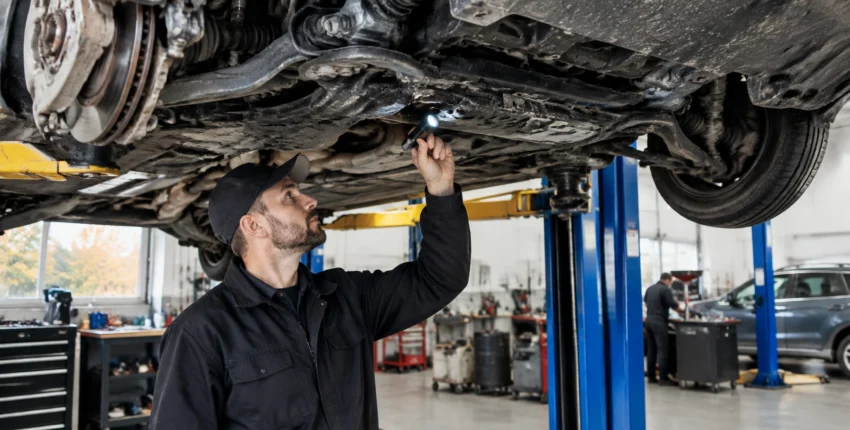
A proper seasonal inspection begins with safely raising the vehicle and cleaning enough dirt away to see the components clearly. The technician then looks for both visible corrosion and signs of weakening metal.
During a winter-readiness or seasonal service, the inspection may include:
- Brake lines, hoses, clips and brackets
- Fuel lines, tank straps and shields
- Subframe, frame rails and mounting points
- Control arms, springs, shocks and suspension brackets
- Exhaust hangers and heat shields
- Rocker panels, floorpan seams and body mounts
- Fluid leaks, damaged shields and packed debris
- Signs of rubbing, movement or previous repairs
Your technician may recommend monitoring, cleaning, rust treatment or replacement depending on the condition. Safety-critical parts should not be covered up and left in service simply because they have been treated. If a brake line is deeply pitted or a structural mount is compromised, replacement may be the safer solution.
A seasonal inspection can also identify issues that are not caused by rust but become more noticeable in winter, such as worn brakes, damaged suspension parts, weak tires or alignment concerns.
For drivers looking for a safety inspection in Barrie, Auto Tech Solutions checks key systems including brakes, steering, suspension and tires. This can be especially valuable before winter travel or when you are preparing a vehicle for Ontario road requirements.
A practical Barrie winter protection routine
Before the first major salt application:
- Arrange an underbody inspection if your vehicle is older, has visible rust or has spent several winters in Ontario.
- Repair paint chips, damaged splash shields and loose wheel-well liners.
- Choose an appropriate rustproofing treatment if your vehicle is a good candidate.
- Confirm that brakes, tires, battery and windshield-washer systems are ready for cold weather.
- Plan regular washes with an underbody rinse once salt is active.
After winter, schedule another inspection if you drive extensively, notice new rust or have travelled through heavy slush and salt. Finding a corroded bracket in spring is far better than discovering a failed brake line when you need to stop on an icy road.
Protect your vehicle before the salt arrives
Road salt is necessary for safer winter roads, but it does not have to quietly shorten your vehicle’s life. Regular underbody washing, timely rustproofing, early repairs and professional inspections can help protect the components that keep you safe.
If you need dependable auto repair in Barrie, Auto Tech Solutions can inspect your vehicle’s brakes, suspension, underbody and other winter-critical systems. The team also provides scheduled maintenance, diagnostics and certified safety inspections for domestic, import, hybrid and electric vehicles.
Book an inspection or seasonal service before the first salt hits the roads and address small problems before they become expensive car repair in Barrie emergencies.