
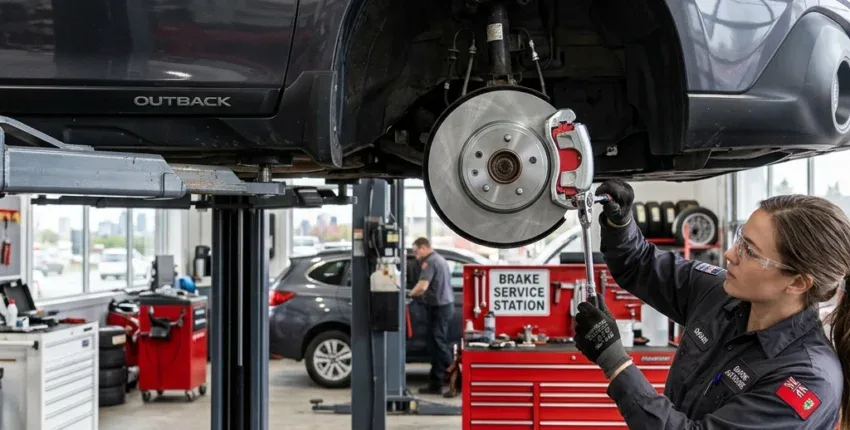
When your brakes make an unfamiliar noise, it is easy to wonder whether you are hearing a minor winter nuisance or an expensive repair developing underneath the wheel.
For drivers in Barrie, that question becomes especially important before winter. Cold temperatures, road salt, moisture, stop-and-go traffic, and the hills around the area can all place extra demands on your braking system. A brief squeal on a cold morning may not mean your vehicle needs major work. A grinding sound, however, should never be ignored.
Understanding the difference between brake squeal and brake grinding can help you decide when to monitor the sound, when to book an inspection, and when your vehicle may need a complete brake job.
What Does Brake Squealing Usually Mean?
Brake squeal is typically a high-pitched sound. It may happen when you press the brake pedal, or in some cases while the vehicle is moving slowly.
Not every squeal means your brakes are unsafe. Overnight moisture can leave a light film of surface rust on the rotors, particularly during Barrie’s damp, cold months. The first few brake applications may scrape that film away, producing a brief squeak or light scraping noise.
If the noise disappears after a few stops and your vehicle brakes normally, moisture or surface rust may be the cause.
Persistent squealing is different. A squeal that continues throughout your drive may indicate:
- Brake pads that are becoming thin
- A built-in pad wear indicator contacting the rotor
- Glazed pads from excessive heat
- Debris caught between the pad and rotor
- Caliper hardware or guide pins that are sticking
- Uneven pad wear caused by a caliper problem
Many brake pads include a small metal wear indicator designed to make noise when the friction material is getting low. Think of it as an audible warning light. It is there to encourage you to arrange service before the pad wears down completely.
That warning is useful, but it does not tell you how much damage has already occurred. The only reliable way to know is to inspect the pads, rotors, and related components.
What Does Brake Grinding Mean?
Grinding is more serious than squealing.
If you hear a harsh grinding sound whenever you apply the brakes, the friction material may have worn away completely. The metal backing plate of the brake pad can then contact the rotor directly. This metal-on-metal contact can damage the rotor quickly and reduce braking performance.
Grinding may also result from a damaged rotor, a seized caliper, or a foreign object caught in the braking assembly. Whatever the cause, the sound calls for prompt attention.
You should arrange an immediate brake inspection if grinding is accompanied by:
- A noticeable decrease in stopping power
- Pulling to one side
- Steering wheel vibration
- A pulsating brake pedal
- A soft or unusually low pedal
- A brake warning light
- Burning smells or excessive heat from one wheel
Continuing to drive with grinding brakes can turn a relatively contained pad replacement into a more extensive repair. It can also compromise your ability to stop safely in traffic, on a hill, or on a slippery winter road.
Brake Pads and Rotors: What Wears Out?
Brake pads and rotors work together, but they do not wear in exactly the same way.
Brake pads
Brake pads contain friction material that presses against the rotor when you brake. Over time, that material becomes thinner. The rate of wear depends on your driving habits, vehicle weight, traffic conditions, and the type of driving you do.
Frequent city driving, repeated short trips, towing, and heavy braking can wear pads more quickly than steady highway driving.
A pad may need replacement when it reaches the manufacturer’s minimum recommended thickness. It may also need to be replaced sooner if it is cracked, contaminated, glazed, or wearing unevenly.
Brake rotors
Rotors are the flat metal discs that the pads clamp against. They need to remain thick and smooth enough to absorb and release heat safely.
A rotor may require machining or replacement if it has:
- Deep grooves or scoring
- Blue or dark heat spots
- Cracks
- Excessive rust
- Uneven wear
- Excessive runout, commonly felt as pedal pulsation
- Thickness below the manufacturer’s minimum specification
This is why simply installing new pads over damaged rotors is not always a proper repair. It is similar to putting a new shoe on a badly uneven foot: the new part cannot work correctly if the surface beneath it is not suitable.
Our guide on common brake mistakes to avoid explains why a “pad slap”: replacing pads without properly checking the rotors: can lead to noise, uneven contact, and disappointing brake performance.
Why Barrie Winters and Hills Can Wear Brakes Faster
Your vehicle’s brakes work harder when road and weather conditions demand frequent speed changes.
Winter contributes to brake wear in several ways. Road salt and moisture can accelerate corrosion on rotors, calipers, hardware, and brake lines. Snow and slush can also collect around the wheels, while freezing temperatures may make existing hardware problems more noticeable.
Barrie drivers also deal with changing road conditions. A winter commute may include stop-and-go traffic, icy intersections, packed snow, and steep or winding sections of road. When traction is limited, you may brake more often and more gently, but over a longer period.
Hills create another challenge. Riding the brakes continuously on a descent creates heat. Excessive heat can glaze the pad surface, cause squealing, and accelerate wear. It can also contribute to rotor distortion or brake fade: a reduction in braking effectiveness after repeated heavy use.
Using a lower gear when appropriate and leaving more following distance can reduce unnecessary brake heat. Still, winter conditions cannot eliminate the need for regular inspections, particularly if your vehicle is used daily or carries heavy loads.
When Is a Full Brake Job Necessary?
The phrase “full brake job” can mean slightly different things from one shop to another. In many cases, it refers to replacing the brake pads and rotors on one axle, along with inspecting and servicing the hardware and calipers.
A complete brake service may include:
- Removing and measuring the brake pads
- Measuring rotor thickness against manufacturer specifications
- Checking rotors for grooves, cracks, heat damage, and runout
- Inspecting caliper pistons and guide pins
- Cleaning and lubricating appropriate contact points
- Replacing damaged clips, shims, or hardware
- Checking brake hoses and lines for corrosion or leaks
- Testing brake fluid condition and level
- Bedding in the new pads and verifying braking performance
You may need this more extensive repair if the pads are worn and the rotors are damaged, if the caliper is sticking, or if uneven wear has caused one side of the brake system to work harder than the other.
A simple pad replacement may be appropriate when the rotors are smooth, within specification, and free from significant scoring or heat damage. Even then, the rotors should be measured rather than judged by appearance alone.
In some cases, a brief squeak can be resolved with cleaning, hardware service, or correction of a minor issue. The important point is to identify the cause before choosing the repair.
How Certified Technicians Inspect the Whole Brake System
At Auto Tech Solutions Inc., brake repair in Barrie begins with inspection: not assumptions.
Our certified Class “A” 310S Red Seal Endorsed technicians assess the entire braking system, including:
- Pad thickness and wear pattern
- Rotor thickness and surface condition
- Caliper movement and piston operation
- Guide pins, clips, shims, and other hardware
- Brake hoses and lines
- Brake fluid level and condition
- Parking brake operation
- Warning lights and related electronic systems
- Wheel and tire condition that may affect stopping performance
A visual check through the wheel is useful, but it cannot reveal every problem. A rotor can look acceptable while measuring below its safe thickness. Likewise, one pad may appear adequate while the inside pad is nearly worn out because of a sticking caliper.
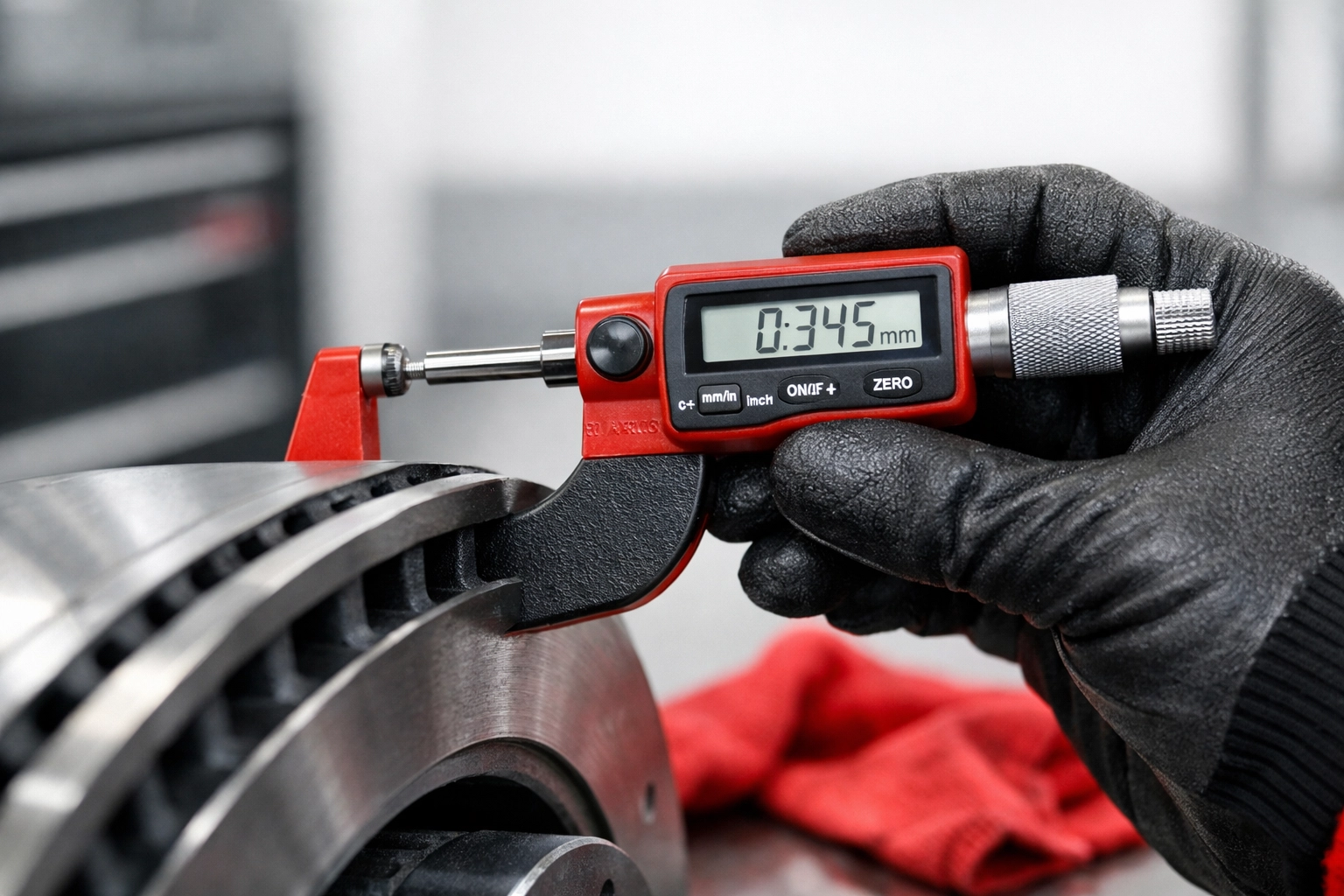
Precise measurements help determine whether a component can remain in service, be machined where appropriate, or needs replacement. Through a digital vehicle inspection, findings can also be explained clearly so you understand what needs attention now and what can be planned for later.
That approach matters when you are preparing for winter. It gives you a better picture of your vehicle’s safety without relying on guesswork or replacing parts unnecessarily.
When Should You Book Brake Repair in Barrie?
Do not wait for a grinding sound before arranging service. Book an inspection if you notice persistent squealing, a change in pedal feel, vibration, pulling, or a longer stopping distance.
A brief squeal during the first few stops on a cold or wet morning may be normal if it disappears quickly and braking remains consistent. However, if the sound continues, becomes louder, or is joined by any change in performance, have the system checked.
A seasonal inspection is also worthwhile if you are preparing for winter travel, towing, carrying heavier loads, or driving regularly in stop-and-go traffic. A broader multi-point vehicle inspection can identify related concerns involving tires, suspension, steering, and fluid systems before they become more serious.
Prepare Your Brakes Before Winter
Your brakes are not the place to guess or postpone service. A short-lived cold-weather squeal may be harmless, but persistent squealing and grinding can point to worn pads, damaged rotors, or a caliper problem that affects your safety.
Before winter arrives, have the complete system inspected so you know how much life remains in your pads and rotors: and whether the rest of the braking system is ready for Barrie roads.
If you hear brake squeals or grinding, contact Auto Tech Solutions Inc. to arrange a professional inspection. Our team can explain the condition of your brakes, outline your options, and help you drive into the winter season with greater confidence.