We’ve all been there: you’re cruising down Bayfield Street or heading south on Highway 400 when traffic suddenly grinds to a halt. You hit the pedal, and for a split second, you wonder, will I stop in time?
Brakes are arguably the most critical safety component of your vehicle, yet they are often the most misunderstood. Living here in Barrie, our braking systems deal with a lot. From the bone-chilling humidity that rusts rotors overnight to the heavy stop-and-go traffic during the Friday afternoon “cottage rush,” your brakes are working overtime.
At Auto Tech Solutions Inc., our Red Seal technicians see a lot of brake jobs. Unfortunately, we also see a lot of DIY attempts and “budget” shop repairs that missed the mark. These small errors can lead to big safety risks.
Here are the 7 most common mistakes people make with their brakes and, more importantly, how our team fixes them to ensure you’re driving with total peace of mind.
1. The “Pad Slap” (Replacing Pads But Not Rotors)
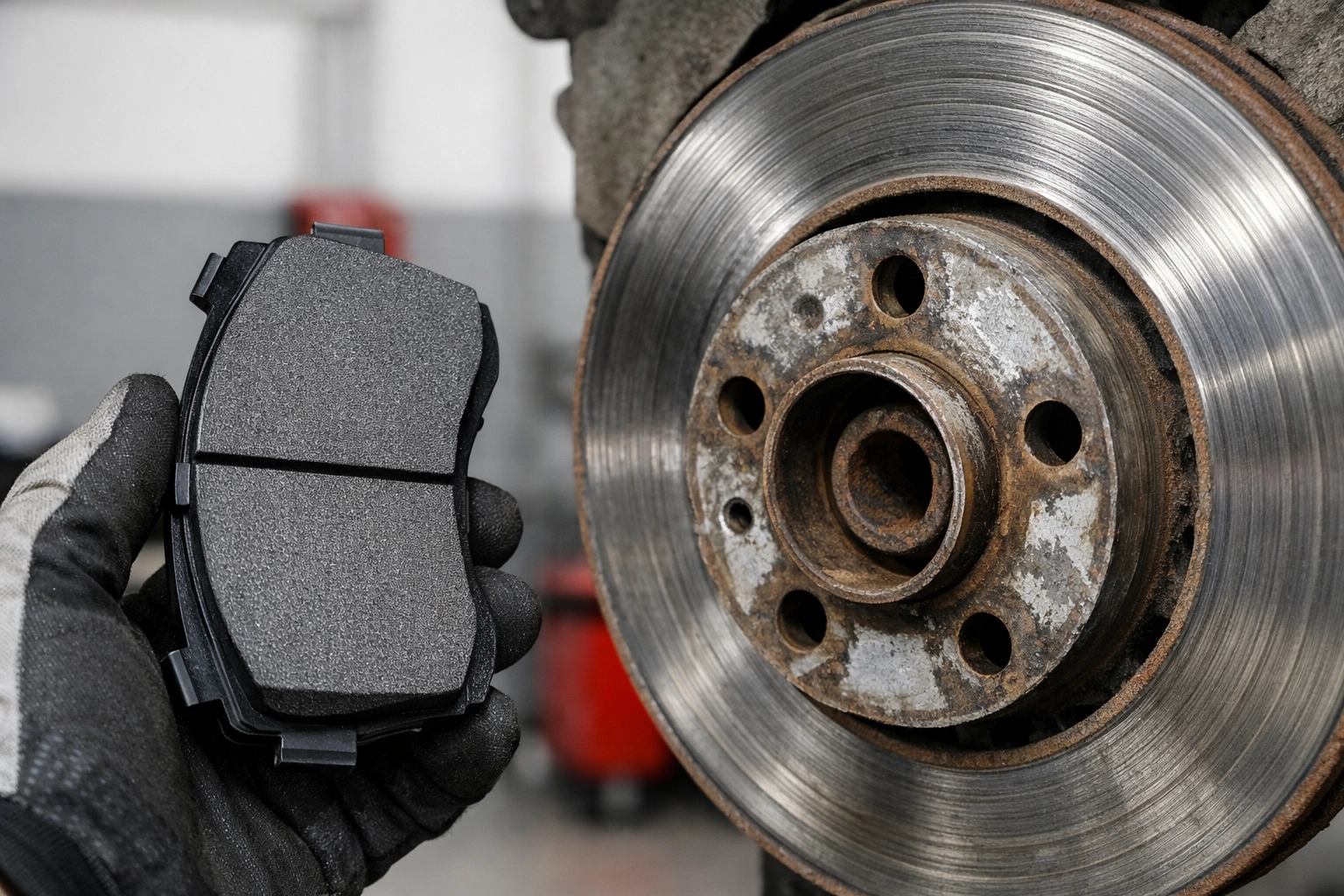
The most common mistake we see is the “pad slap.” This is when a driver (or a rushed shop) simply swaps out old brake pads for new ones while leaving the old rotors in place without any surfacing or measurement.
The Problem: Think of your brake pads and rotors like a team. They need to “mate” perfectly to create friction. Over time, your old rotors develop grooves, heat spots, and a glaze of old friction material. If you put flat, new pads on a grooved, old rotor, they won’t make full contact. This leads to longer stopping distances, annoying squeals, and a pedal that feels “squishy.”
The Fix: Every time you get a brake repair in Barrie, the rotors must be inspected. We measure the thickness and check for “runout” (wobble). If the rotors are thick enough and in good shape, they might be able to be machined. However, with modern, thinner rotor designs, we usually recommend replacing them alongside the pads to ensure 100% safety and performance.
2. Ignoring the Guide Pins and Lubrication
If you look at your brakes, they involve heavy metal parts moving against each other at high speeds. To do this smoothly, they need lubrication. A major mistake is failing to clean and grease the caliper guide pins.
The Problem: In Barrie, we deal with an incredible amount of road salt and slush. This cocktail of chemicals is a nightmare for moving parts. If the guide pins aren’t cleaned and lubricated with the correct high-temperature brake grease, they seize up. This causes your pads to wear unevenly, one side might look brand new while the other is worn down to the metal.
The Fix: During our safety inspection in Barrie, we pull those pins out, clean off the old gunk, and apply fresh, premium lubricant. It’s a small step that prevents a “stuck” brake and saves you money on premature pad replacement.
3. Installing Pads Backwards (Yes, It Happens!)
It sounds hard to believe, but in the heat of a DIY project or a rushed job, brake pads can be installed backward, with the metal backing plate facing the rotor instead of the friction material.
The Problem: Metal-on-metal contact creates an immediate, horrific grinding noise and destroys your rotors in minutes. Even if they are facing the right way, many pads have specific “inner” and “outer” positions or specific orientations for wear indicators. If these are swapped, the brakes won’t seat properly.
The Fix: Experience matters. Our Red Seal technicians know the specific geometry of hundreds of different brake systems. We ensure every shim, clip, and pad is oriented exactly as the manufacturer intended. We also check the “wear indicators”, those little metal tabs that chirp when your pads are low, to make sure they are positioned to alert you at the right time.
4. Guessing Instead of Measuring (Rotor Specifications)
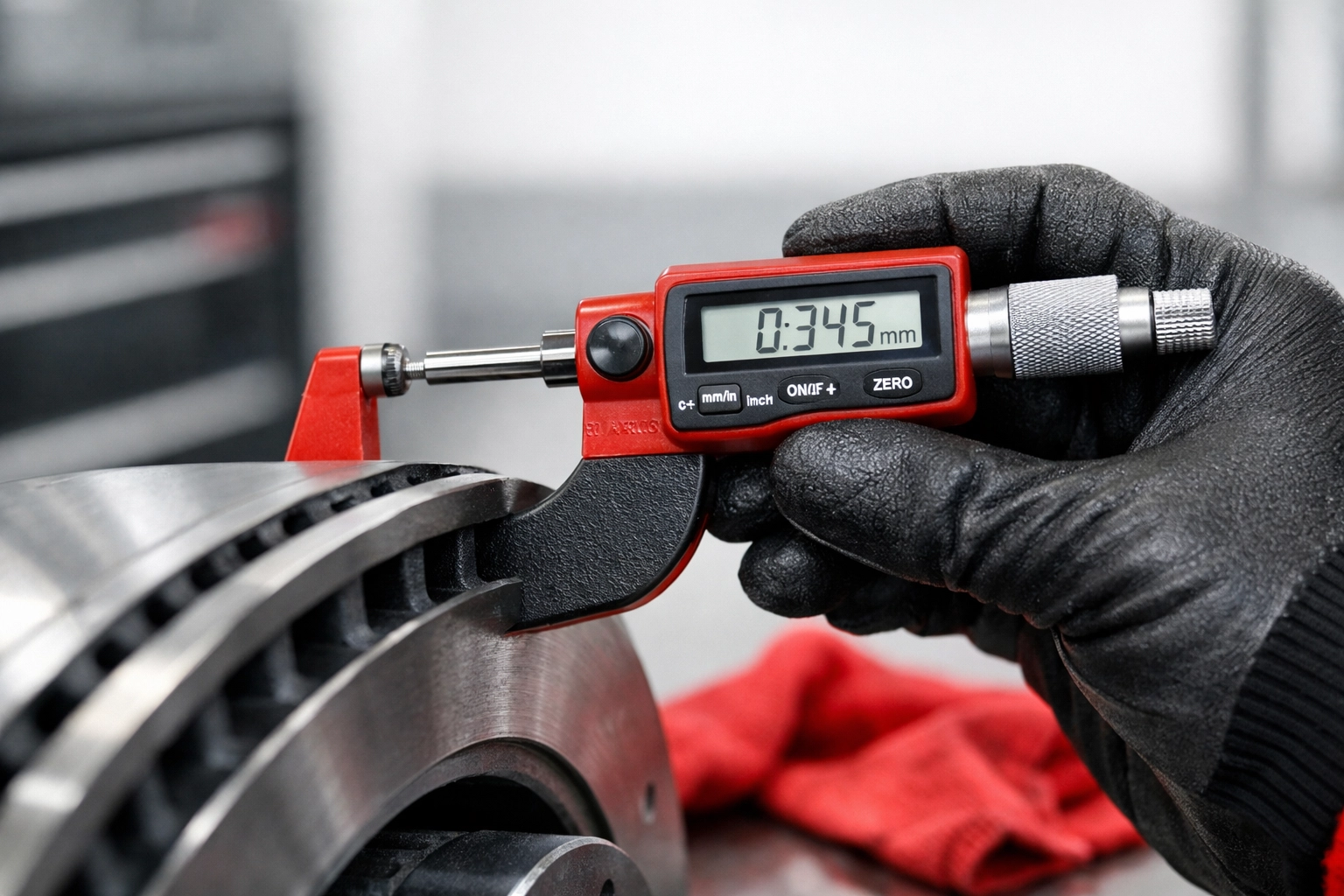
A “visual check” is never enough when it comes to brakes. A rotor might look “okay” to the naked eye but be dangerously thin.
The Problem: Rotors have a “minimum discard thickness” stamped right on them. If a rotor is too thin, it cannot dissipate heat effectively. This leads to “brake fade,” where your brakes lose stopping power during heavy use (like coming down a steep hill into the Barrie waterfront). In extreme cases, a thin rotor can even crack or shatter.
The Fix: We use precision micrometers to measure your rotors to the thousandth of an inch. If it’s below the safety limit, it goes in the scrap bin. No exceptions. Transparency is huge for us, so we often show our customers these measurements as part of our digital vehicle inspections.
5. Letting the Caliper Hang by the Hose
When you take the brakes apart, the caliper (the big “clamp” that holds the pads) has to be moved out of the way to get to the rotor. A classic rookie mistake is letting that heavy metal caliper hang by the rubber brake hose.
The Problem: Brake hoses are tough, but they aren’t designed to support the weight of a 10-pound steel caliper. Letting it hang can cause internal tears in the hose. These tears act like a one-way valve, trapping fluid and causing your brakes to stay “on” even when you let go of the pedal, or worse, causing the hose to burst under pressure.
The Fix: We always use specialized “S-hooks” or hangers to support the caliper weight, keeping the tension off the hydraulic lines. It’s a “safety first” habit that separates the pros from the amateurs.
6. Over-Torquing the Bolts (The “Hulk” Mistake)
There is a common misconception in auto repair that “tighter is always better.” When it comes to brake caliper bolts, that couldn’t be further from the truth.
The Problem: Over-tightening the guide pin bolts or mounting bolts can stretch the metal or even snap the head off the bolt. If a bolt is over-stressed, it might fail while you’re driving, leading to a catastrophic loss of braking. On the flip side, under-tightening is just as scary.
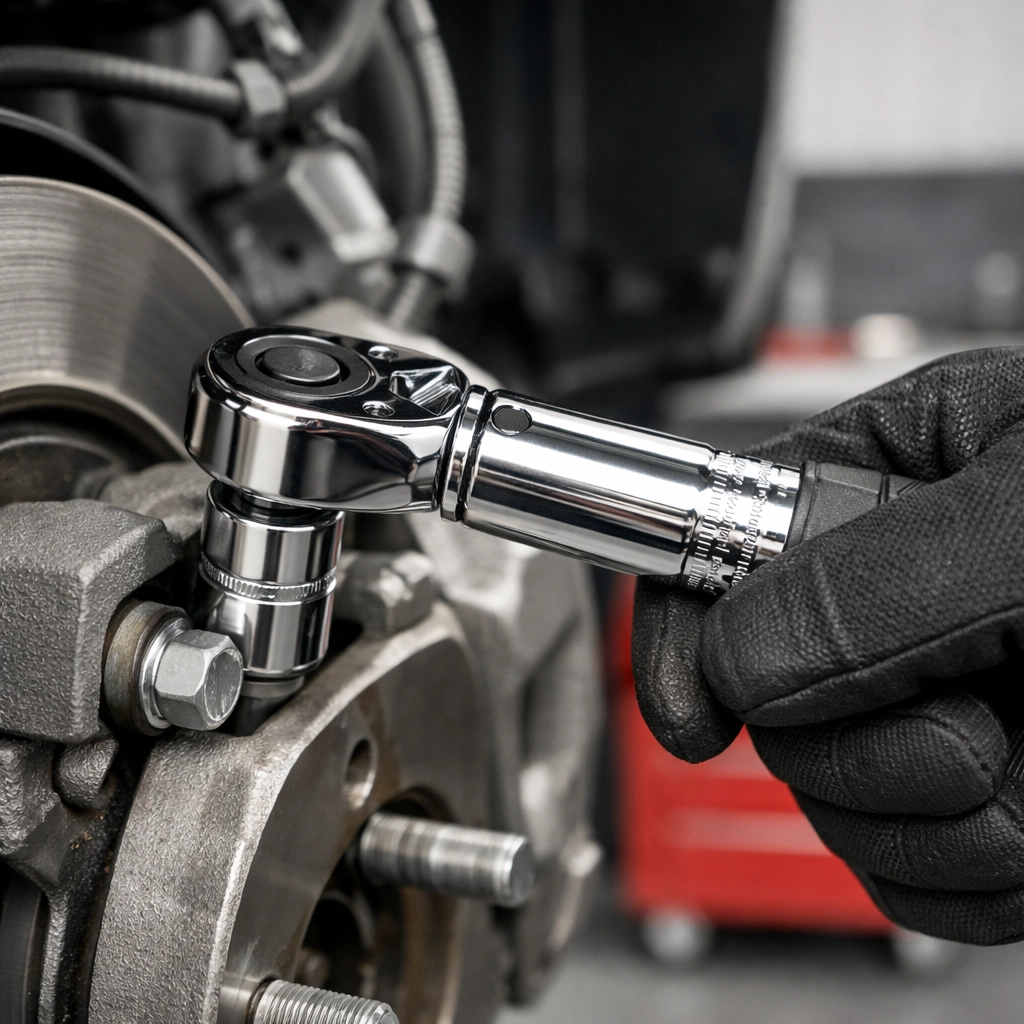
The Fix: We don’t guess. Our technicians use calibrated torque wrenches to tighten every single bolt to the exact foot-pound specification required by your vehicle’s manufacturer. It’s about precision, not muscle.
7. Forgetting to “Pump” the Brakes Before Driving
You’ve finished the job, the wheels are back on, and you’re ready to go. You put the car in gear, hit the brake, and… nothing. The pedal goes straight to the floor.
The Problem: When we compress the brake pistons to fit the new, thicker pads, there is a gap between the pad and the rotor. It takes a few pumps of the pedal to move the fluid back into the caliper and push the pads against the rotor. If you don’t do this before you shift into “Drive,” you might find yourself rolling into your garage wall or out into traffic without any stopping power.
The Fix: This is part of our rigorous post-repair protocol. Before any car leaves our bay, we pump the brakes until they are firm, check the fluid levels, and perform a slow-speed test in our lot. We make sure that first “real world” stop is a safe one.
Why Barrie Roads Demand More from Your Brakes
Barrie isn’t just any city; it’s a place with unique driving challenges. We have heavy salt usage in the winter which corrodes brake lines and causes calipers to seize. We have the “lake effect” moisture that can cause a layer of rust to form on rotors overnight.
Because of this, we recommend more than just a quick look. Our multi-point inspections are designed to catch these 7 mistakes and many others before they become a safety hazard on the 400.
The Auto Tech Solutions Difference
At Auto Tech Solutions Inc., we treat your vehicle like it’s our own family’s car. Our Red Seal technicians bring a level of expertise that ensures every brake repair in Barrie is done right the first time. We value transparency, safety, and your long-term trust over a quick sale.
Don’t wait for the “grinding” sound to tell you there’s a problem. If your pedal feels different, your car pulls to one side when braking, or you just haven’t had a check-up in a while, come see us. We’ll make sure your stopping power is exactly where it needs to be.
Drive with confidence. Drive safe. We’ve got your back.